Frost-Free, Non-Electric Waterers for Remote Paddocks
Learn how to get reliable, frost-free winter water to remote paddocks without electricity using non-electric livestock waterers and smart cold-climate design.
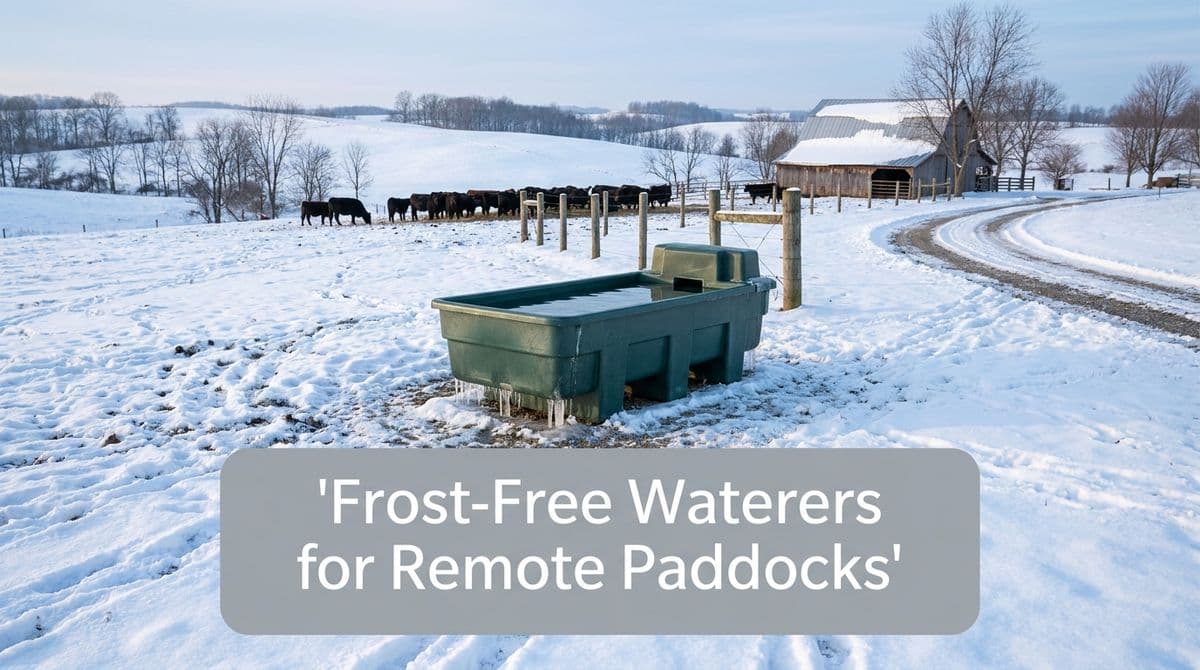
How We Helped an Oregon Horse Owner Plan Frost-Free Waterers
We recently got a call from a barn owner — let’s call her Lisa — who runs a small horse boarding facility. She told us, “We’re trying to get reliable water out to some faraway paddocks where we can’t get electricity. It gets really cold here, and I keep seeing these frost-free, non-electric waterers online. Do they actually work for horses, or are they just for cattle?”
That’s a question we hear a lot, especially from folks who are expanding pastures or setting up remote winter paddocks. If you’re in the same boat as Lisa, trying to keep water flowing without running power, there are good options — but the details matter.
What “Frost-Free, Non-Electric” Really Means
When we talk about frost-free, non-electric livestock waterers, we’re usually talking about one of two basic setups:
- Frost-free hydrants with insulated troughs (you open valves manually)
- Frost-free automatic waterers that use ground heat instead of electricity
In both cases, the key is the same: keep the water line and valve below the frost depth so they don’t freeze, and limit the amount of water exposed to the air.
Here in our area, we have severe cold, so we routinely set water lines 5–6 feet deep. Your local frost depth may be different, but if you want “frost-free,” you have to respect that number.
Can Horses Use Non-Electric Frost-Free Waterers?
Lisa had heard about “step-on” style waterers and was worried: “I’ve heard cows do better with those. Do horses actually figure them out?”
Most horses can learn to use non-electric frost-free systems, but you have to pick the right design:
- Ball-type or flap-style bowls: Horses nudge a ball or flap aside to access water. Many adapt fine with a little training.
- Open-bowl frost-free units: These use ground heat and insulation to keep a small exposed bowl from freezing. No stepping or pushing needed.
- Step-valve systems: The animal steps on a pad to open the valve. These are generally more reliable with cattle than with horses.
When we walked Lisa through the options, we recommended avoiding step-only systems for horses unless she had specific experience training them. For most boarding barns, an insulated, open-bowl frost-free unit or a ball-type waterer is a safer bet.
Planning Your Frost-Free Non-Electric System
For Lisa’s remote paddocks, we broke the planning down into a few key steps. You can follow the same process on your property:
1. Check Frost Depth and Water Source
First: find your local frost depth (your county extension office or a local contractor can tell you). Your water line and the waterer’s valve chamber need to be buried below that depth.
Then decide where you’re pulling water from:
- Existing pressure line: Easiest if you already have a buried water line nearby.
- New line from the house or well: More digging, but gives you long-term flexibility for future paddocks.
- Gravity-fed system: Possible if you have a higher-elevation tank, but it requires careful design and usually a pro’s input.
2. Choose the Right Type of Waterer
We talked Lisa through the pros and cons for horses in cold climates:
- Frost-free hydrant + insulated trough:
Lower upfront cost, simple parts, but you or your boarders have to manage filling and draining. Works well if someone visits daily. - Non-electric automatic waterer:
Higher initial cost, minimal daily labor, very reliable if installed correctly. Ideal for remote paddocks where you still want convenience.
Many of the brands you see on farm supply sites and contractor websites do offer non-electric models rated for horses. When you’re comparing, look specifically for:
- “Non-electric” or “no heater required” clearly stated
- “Rated for equine” or “for horses and cattle” (not cattle only)
- Minimum recommended herd size for winter use (more animals = more water turnover)
Cost Ranges and What You’re Really Paying For
Lisa was understandably nervous about “spending a lot of money” and then finding out the system didn’t work. Here’s what we usually tell folks, just as a ballpark:
- Quality non-electric frost-free waterer unit: roughly $400–$1,200 each depending on size and brand
- Excavation and trenching: varies widely, but plan on several hundred to a few thousand dollars if you’re running a long new line
- Plumbing materials: insulated risers, valves, fittings, and drain rock are often a few hundred dollars per location
The excavation is usually the biggest wild card. For Lisa, we suggested grouping paddocks so one central waterer could serve multiple pens, which cuts down trenching distance and cost.
Winter Performance: What Makes These Systems Actually Work
Non-electric waterers stay ice-free in winter because of a few design details working together:
- Deep burial: The riser pipe sits in ground that stays above freezing.
- Insulated casing: Keeps ground warmth around the water column.
- Small exposed surface: Less water is in contact with freezing air.
- Constant turnover: More drinking means more fresh, relatively warm water coming up from below.
That last point is important: if you only have one or two horses using a large unit designed for 20 head of cattle, the water may not turn over fast enough in extreme cold. For Lisa’s boarding barn, we matched unit size to the number of horses per paddock so there would be adequate daily usage.
Maintenance Tips for Trouble-Free Winters
Non-electric doesn’t mean no maintenance. Here’s the routine we recommend to clients like Lisa:
- Before winter: Check valve seals, adjust float levels, and confirm the drain or weep hole is clear so standing water doesn’t freeze in the riser.
- Early cold snaps: Watch water level and flow closely for a few days to be sure everything is working as designed.
- Mid-winter: Scrub bowls regularly so algae and slime don’t build up, even when it’s cold.
- Spring: Inspect for any frost heave around the base and regrade or add gravel if needed so water drains away from the pad.
Regional Considerations: Learning from Colder Climates
One reason Lisa called us, even though she’s out of state, was because she knew we deal with harsher winter temperatures. That’s actually a smart strategy: if a non-electric system is proven in a colder region, it usually performs just fine in slightly milder areas as long as local frost depth is respected.
Our advice to her — and to you — was:
- Talk to local horse owners using non-electric systems and ask what brands survive your worst winters.
- Make sure whoever installs your system has actual cold-climate experience, not just warm-weather plumbing.
- When in doubt, go a bit deeper with your trench and add extra insulation around the riser.
Is a Non-Electric Frost-Free System Right for Your Barn?
For Lisa’s boarding facility, the answer was yes — with some careful planning. By choosing horse-friendly units, burying the lines below frost depth, and sizing the waterers to match her herd count, she could get reliable winter water to remote paddocks without ever running power out there.
If you’re looking at a similar project, we’re always happy to talk through options, share what’s worked for our customers in severe cold, and help you design a system that fits your layout and your budget. A little planning now can save you a lot of chopping ice — and a lot of frozen fingers — next winter.